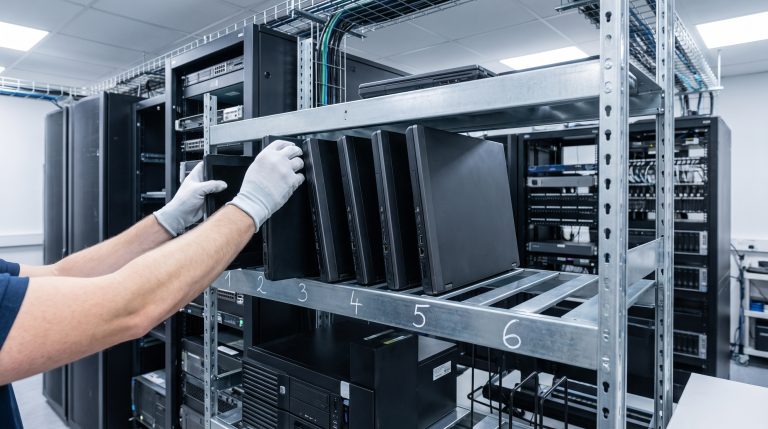
How proximity, accountability, and controlled asset handling can reduce risk throughout the disposition process.
When organizations evaluate IT asset disposition providers, much of the conversation centers on data destruction, recycling certifications, and financial recovery. While these are essential considerations, one of the most important elements of a successful ITAD program is often overlooked: chain of custody. Chain of custody refers to the documented control and accountability of IT equipment as it moves from an organization’s facility through transportation, processing, and final disposition. For businesses handling sensitive information, maintaining a secure chain of custody is not simply a logistical requirement. It is a fundamental component of risk management. Working with a qualified local ITAD provider can offer meaningful advantages in visibility, responsiveness, and operational control.
Every Transfer Introduces Potential Risk
The moment IT equipment leaves an organization’s facility, responsibility for protecting those assets becomes increasingly complex. Equipment may pass through multiple parties, including transportation companies, consolidation centers, warehouses, processing facilities, and downstream recycling partners. Each transfer creates another opportunity for equipment to be misplaced, damaged, improperly handled, or separated from its documentation. These risks are particularly concerning when retired equipment contains sensitive customer information, financial records, intellectual property, or other confidential data. An effective chain-of-custody program minimizes unnecessary handoffs and ensures that each transfer of responsibility is documented.
The Advantages of Working With a Local ITAD
Proximity can provide significant benefits when managing sensitive technology assets. A qualified local ITAD provider may offer more direct control over collection schedules, transportation, communication, and processing activities. Rather than coordinating equipment movement across several geographic regions or multiple subcontractors, organizations may be able to establish a more streamlined process with fewer parties involved. Local partnerships can also support faster response times for urgent collections, office closures, technology refreshes, and unexpected equipment retirement requirements. For organizations with frequent disposition needs, this flexibility can be particularly valuable. However, local presence alone does not guarantee security. The provider must still demonstrate appropriate transportation controls, documented procedures, trained personnel, and secure processing practices.
Asset-Level Tracking Creates Accountability
A reliable chain-of-custody process begins with accurate inventory management. Assets should be identified and recorded at an appropriate point in the collection process, with documentation maintained as they move through each stage of disposition.
Depending on the customer’s requirements, this may include:
- Asset serial numbers and identifying information
- Collection dates and locations
- Transportation and transfer records
- Receiving confirmations and inventory reconciliation
- Data sanitization or destruction results
- Final disposition documentation
These records provide customers with greater confidence that equipment has been accounted for and processed according to established requirements. They also help identify discrepancies before those issues become significant security or compliance concerns.
Secure Transportation Is Critical
Transportation represents one of the most vulnerable stages of IT asset disposition. Equipment is frequently moved in bulk, sometimes across significant distances, and may be handled by personnel who are not directly involved in data security operations.
A qualified ITAD partner should have clear procedures governing transportation, vehicle security, personnel accountability, shipment documentation, and incident response. Depending on asset sensitivity, additional safeguards may include sealed containers, controlled loading procedures, dedicated transportation, and documented custody transfers. The objective is to maintain visibility and accountability from the customer’s loading dock to the processing facility.
Local Relationships Improve Operational Transparency
One of the less obvious advantages of working with a local ITAD provider is the opportunity to develop a more direct working relationship. Customers may find it easier to conduct facility visits, participate in operational reviews, address inventory discrepancies, and coordinate specialized projects. This proximity can be particularly valuable for regulated organizations, including healthcare providers, financial institutions, educational organizations, and government entities.
Direct access to the people responsible for handling equipment can improve communication and strengthen accountability. A local provider that understands its customers’ operating environments may also be better positioned to customize collection and processing procedures around specific business requirements.
The Blue Star Technologies Perspective
At Blue Star Technologies, we believe that successful IT asset disposition begins with accountability. Data security, financial recovery, and environmental responsibility all depend on equipment being properly controlled throughout the disposition process.
Organizations should seek ITAD partners that prioritize documented custody, secure transportation, accurate inventory management, and transparent communication. For businesses seeking a more responsive and accountable approach, a qualified local partner can provide meaningful operational advantages. Ultimately, chain of custody is about more than knowing where equipment is located. It is about knowing who is responsible for it, how it is protected, and whether every asset can be accounted for from collection through final disposition.